Idioms for esl students might seem like hieroglyphics at first glance, but they’re the secret sauce to sounding naturally fluent. These bite-sized phrases pack cultural nuance and emotional punch—think “hit the books” or “piece of cake”—that textbooks often overlook. Let’s dive into some that’ll level up your everyday conversations.
8 Money Idioms That’ll Save Your Wallet (and Your ESL Game)

When you’re chatting about finances, idioms help you sound sharp without getting bogged down in technical terms. Take “break the bank”—it means to spend beyond one’s means, like splurging on concerts instead of groceries. Meanwhile, “penny pinching” isn’t just stingy; it’s a habit of scrutinizing every dollar. Other gems include “cash cow” (a profitable venture) and “in the red” (running at a loss). These phrases aren’t just for accountants—they’re everyday tools for making witty remarks or understanding pop-culture references.
56 Rare Idioms You Didn’t Know You Needed

If you’re hungry for more than the basics, rare idioms add flair to your vocabulary. Phrases like “spilling the beans” (revealing a secret) or “raining cats and dogs” (a torrential downpour) aren’t just quirky—they reveal cultural storytelling. Try “barking up the wrong tree” to describe someone who’s misdirected in their accusation, or “cost an arm and a leg” for exorbitant purchases. These idioms often come up in literature, movies, and casual banter, so knowing them can help you catch references others might miss.
Practical Tips to Internalize Idioms Without Memorizing a Dictionary
For idioms for esl students, rote memorization rarely sticks. Instead, blend immersion with intentionality. Watch shows with subtitles to see idioms in context, then jot them down in a notebook with notes on usage. For example, notice how “don’t count your chickens before they hatch” appears when characters make premature plans. Flashcards work too—label front with the idiom, back with a scenario: “If a friend bails last-minute, you might say… ‘That’s like dropping the baby…’ (meaning they ‘dropped the ball’).” Practice with language exchange partners, challenging them to guess your idiom choices in real-time conversations.
Idioms for esl students become second nature when tied to personal experiences. When you splurge on concert tickets, silently note “broke the bank” or “hit the jackpot.” Over time, these phrases slip into your subconscious, making you a more engaging communicator. Refer back to the money idioms infographic as a quick refresher, and soon you’ll wield idioms like cultural currency—whether you’re nailing job interviews or joking with friends. What’s one idiom you’ll try today?
Idioms for esl students might seem like hieroglyphics at first glance, but they’re the secret sauce to sounding naturally fluent. These bite-sized phrases pack cultural nuance and emotional punch—think “hit the books” or “piece of cake”—that textbooks often overlook. Let’s dive into some that’ll level up your everyday conversations.
8 Money Idioms That’ll Save Your Wallet (and Your ESL Game)
When you’re chatting about finances, idioms help you sound sharp without getting bogged down in technical terms. Take “break the bank”—it means to spend beyond one’s means, like splurging on concerts instead of groceries. Meanwhile, “penny pinching” isn’t just stingy; it’s a habit of scrutinizing every dollar. Other gems include “cash cow” (a profitable venture) and “in the red” (running at a loss). These phrases aren’t just for accountants—they’re everyday tools for making witty remarks or understanding pop-culture references.
56 Rare Idioms You Didn’t Know You Needed
If you’re hungry for more than the basics, rare idioms add flair to your vocabulary. Phrases like “spilling the beans” (revealing a secret) or “raining cats and dogs” (a torrential downpour) aren’t just quirky—they reveal cultural storytelling. Try “barking up the wrong tree” to describe someone who’s misdirected in their accusation, or “cost an arm and a leg” for exorbitant purchases. These idioms often come up in literature, movies, and casual banter, so knowing them can help you catch references others might miss.
Practical Tips to Internalize Idioms Without Memorizing a Dictionary
For idioms for esl students, rote memorization rarely sticks. Instead, blend immersion with intentionality. Watch shows with subtitles to see idioms in context, then jot them down in a notebook with notes on usage. For example, notice how “don’t count your chickens before they hatch” appears when characters make premature plans. Flashcards work too—label front with the idiom, back with a scenario: “If a friend bails last-minute, you might say… ‘That’s like dropping the baby…’ (meaning they ‘dropped the ball’).” Practice with language exchange partners, challenging them to guess your idiom choices in real-time conversations.
Idioms for esl students become second nature when tied to personal experiences. When you splurge on concert tickets, silently note “broke the bank” or “hit the jackpot.” Over time, these phrases slip into your subconscious, making you a more engaging communicator. Refer back to the money idioms infographic as a quick refresher, and soon you’ll wield idioms like cultural currency—whether you’re nailing job interviews or joking with friends. What’s one idiom you’ll try today?
Burn Bridges Idiom Meaning And Sentence - Infoupdate.org

Burn Bridges Idiom Meaning And Sentence - Infoupdate.org
Idioms - ESLBUZZ
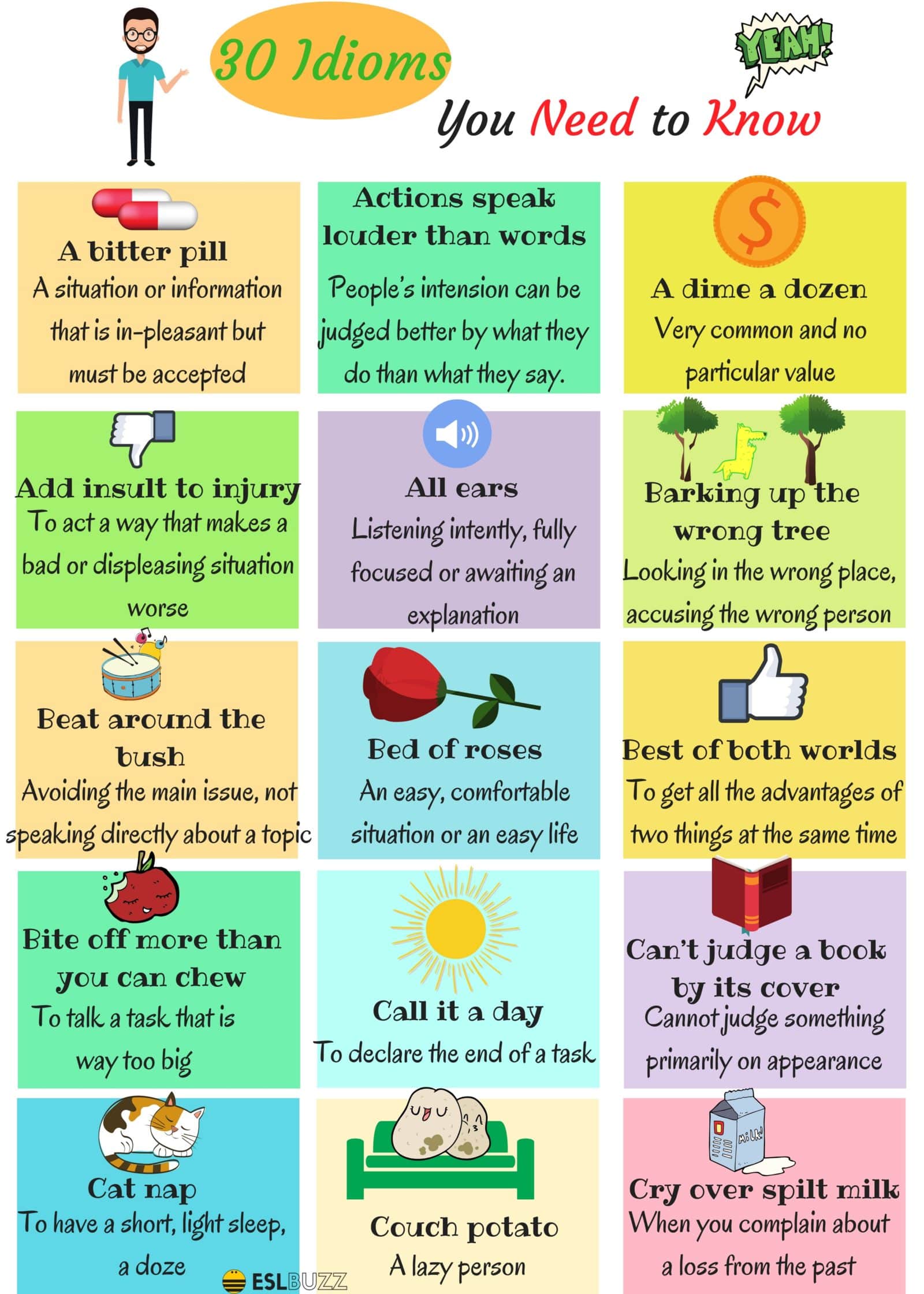
Idioms - ESLBUZZ
Idiom 1500 English Idioms From Az With Examples Vacation Cheat Sheet:

Idiom 1500 English Idioms From Az With Examples Vacation Cheat Sheet: