Idioms for elementary students often feel like puzzles—words that don’t mean what they seem. These colorful phrases can trip up even confident speakers, but with the right approach, kids can unlock their meanings. Below, we’ll break down what idioms are, explore examples that resonate with young learners, and share practical ways to help them stick. Let’s dive in!
Why Idioms Can Be Confusing for Young Learners
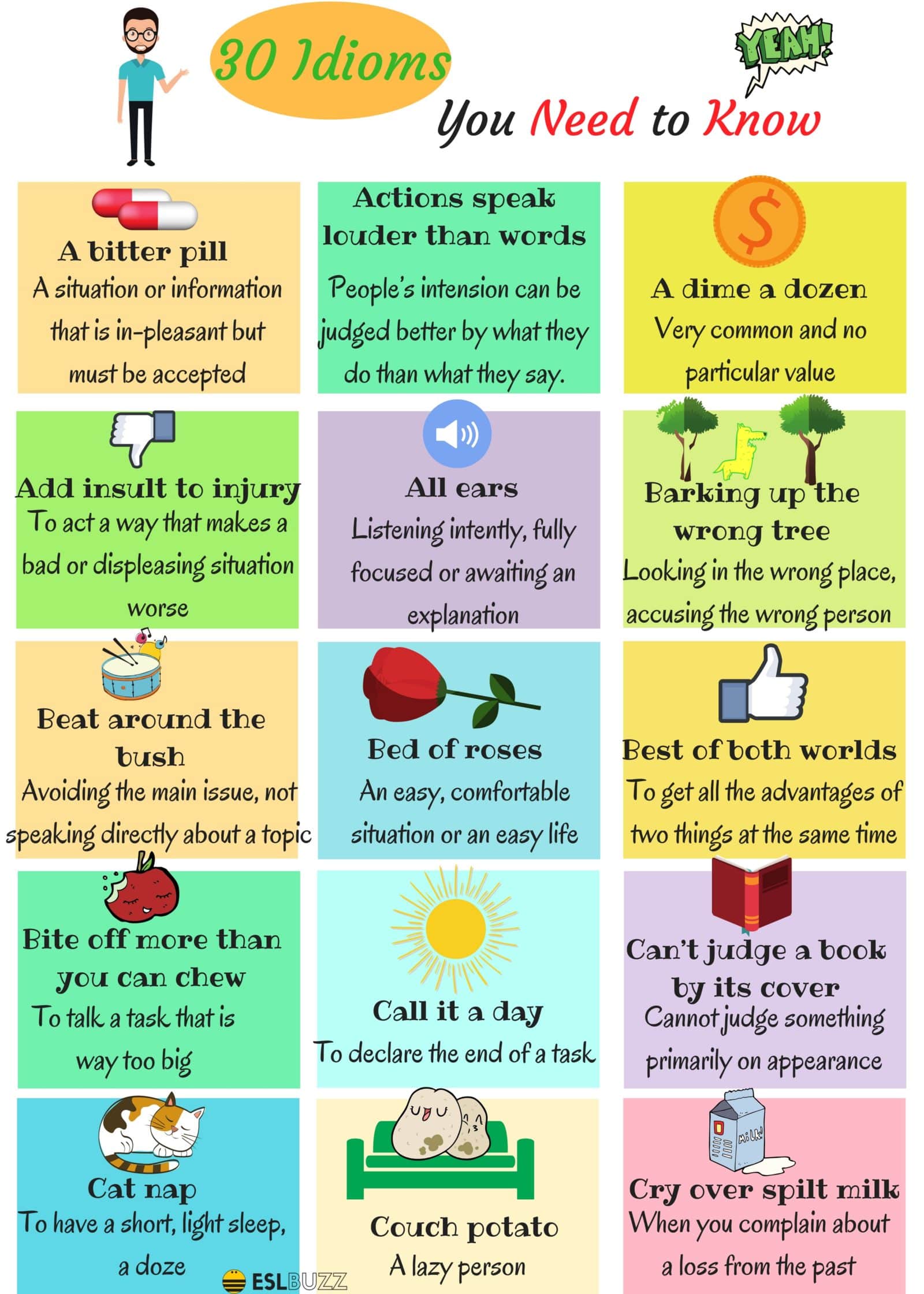
When a child hears “It’s raining cats and dogs,” they might picture pets flooding the streets. Idioms stretch language in fun ways, but literal interpretations lead to misunderstandings. Teachers and parents can start by explaining that idioms are shorthand expressions with figurative meanings. Comparing them to jokes or riddles helps kids see idioms as games rather than barriers.
Examples of Idioms for Elementary Students

Take “burn bridges,” for instance. This idiom means ending a relationship so badly you can’t fix it later. Imagine a student who quits soccer team after arguing with the coach—now they’ve “burned bridges.” Other kid-friendly idioms include “hit the sack” (go to bed), “spill the beans” (share a secret), and “piece of cake” (something easy). Each idiom pairs a concrete image with an abstract idea, making it memorable when linked to relatable scenarios.
- Burn bridges: End a relationship so badly you can’t reconcile.
- Hit the sack: Go to bed or relax for the night.
- Spill the beans: Reveal a secret accidentally or on purpose.
- Piece of cake: Something very easy to do.
Strategies to Teach Idioms Effectively
Start with visual storytelling. Draw “burning bridges” on paper or act it out—have kids pretend to argue with a friend, then show them how to rebuild connections. Use songs or rhymes to anchor tricky phrases. For example, a simple chant like “If it’s raining cats and dogs, we’ll stay inside and hug our dogs!” reinforces meaning through repetition. Pair idioms with pictures or gestures: a tired yawning face for “hit the sack,” or hands revealing a secret for “spill the beans.” Kids learn fastest when they *do* rather than just read definitions.
Putting It Into Practice
Kids need chances to use idioms naturally. Create a classroom “idiom jar” where students draw a phrase and build a story around it. Play games like Charades with idioms acted out silently. Parents can turn everyday moments into teaching moments—when a child finishes homework quickly, celebrate with “piece of cake!” and ask them to explain the phrase. Consistency matters more than perfection; repeated, low-stakes exposure builds confidence.
Mastering idioms isn’t about memorization—it’s about connecting language to life. By blending visuals, stories, and playful practice, elementary students can decode these phrases with curiosity instead of confusion. Start small, stay playful, and watch them go from puzzled to proverbial in no time.
Idioms for elementary students often feel like puzzles—words that don’t mean what they seem. These colorful phrases can trip up even confident speakers, but with the right approach, kids can unlock their meanings. Below, we’ll break down what idioms are, explore examples that resonate with young learners, and share practical ways to help them stick. Let’s dive in!
Why Idioms Can Be Confusing for Young Learners
When a child hears “It’s raining cats and dogs,” they might picture pets flooding the streets. Idioms stretch language in fun ways, but literal interpretations lead to misunderstandings. Teachers and parents can start by explaining that idioms are shorthand expressions with figurative meanings. Comparing them to jokes or riddles helps kids see idioms as games rather than barriers.
Examples of Idioms for Elementary Students
Take “burn bridges,” for instance. This idiom means ending a relationship so badly you can’t fix it later. Imagine a student who quits soccer team after arguing with the coach—now they’ve “burned bridges.” Other kid-friendly idioms include “hit the sack” (go to bed), “spill the beans” (share a secret), and “piece of cake” (something easy). Each idiom pairs a concrete image with an abstract idea, making it memorable when linked to relatable scenarios.
- Burn bridges: End a relationship so badly you can’t reconcile.
- Hit the sack: Go to bed or relax for the night.
- Spill the beans: Reveal a secret accidentally or on purpose.
- Piece of cake: Something very easy to do.
Strategies to Teach Idioms Effectively
Start with visual storytelling. Draw “burning bridges” on paper or act it out—have kids pretend to argue with a friend, then show them how to rebuild connections. Use songs or rhymes to anchor tricky phrases. For example, a simple chant like “If it’s raining cats and dogs, we’ll stay inside and hug our dogs!” reinforces meaning through repetition. Pair idioms with pictures or gestures: a tired yawning face for “hit the sack,” or hands revealing a secret for “spill the beans.” Kids learn fastest when they *do* rather than just read definitions.
Putting It Into Practice
Kids need chances to use idioms naturally. Create a classroom “idiom jar” where students draw a phrase and build a story around it. Play games like Charades with idioms acted out silently. Parents can turn everyday moments into teaching moments—when a child finishes homework quickly, celebrate with “piece of cake!” and ask them to explain the phrase. Consistency matters more than perfection; repeated, low-stakes exposure builds confidence.
Mastering idioms isn’t about memorization—it’s about connecting language to life. By blending visuals, stories, and playful practice, elementary students can decode these phrases with curiosity instead of confusion. Start small, stay playful, and watch them go from puzzled to proverbial in no time.
56 Rare Idioms In English With Meanings And Examples • 7ESL

56 Rare Idioms in English with Meanings and Examples • 7ESL
8 Tricky Idioms About Money With Meanings Infographic

8 Tricky Idioms About Money With Meanings Infographic
Idiom 1500 English Idioms From Az With Examples Vacation Cheat Sheet:
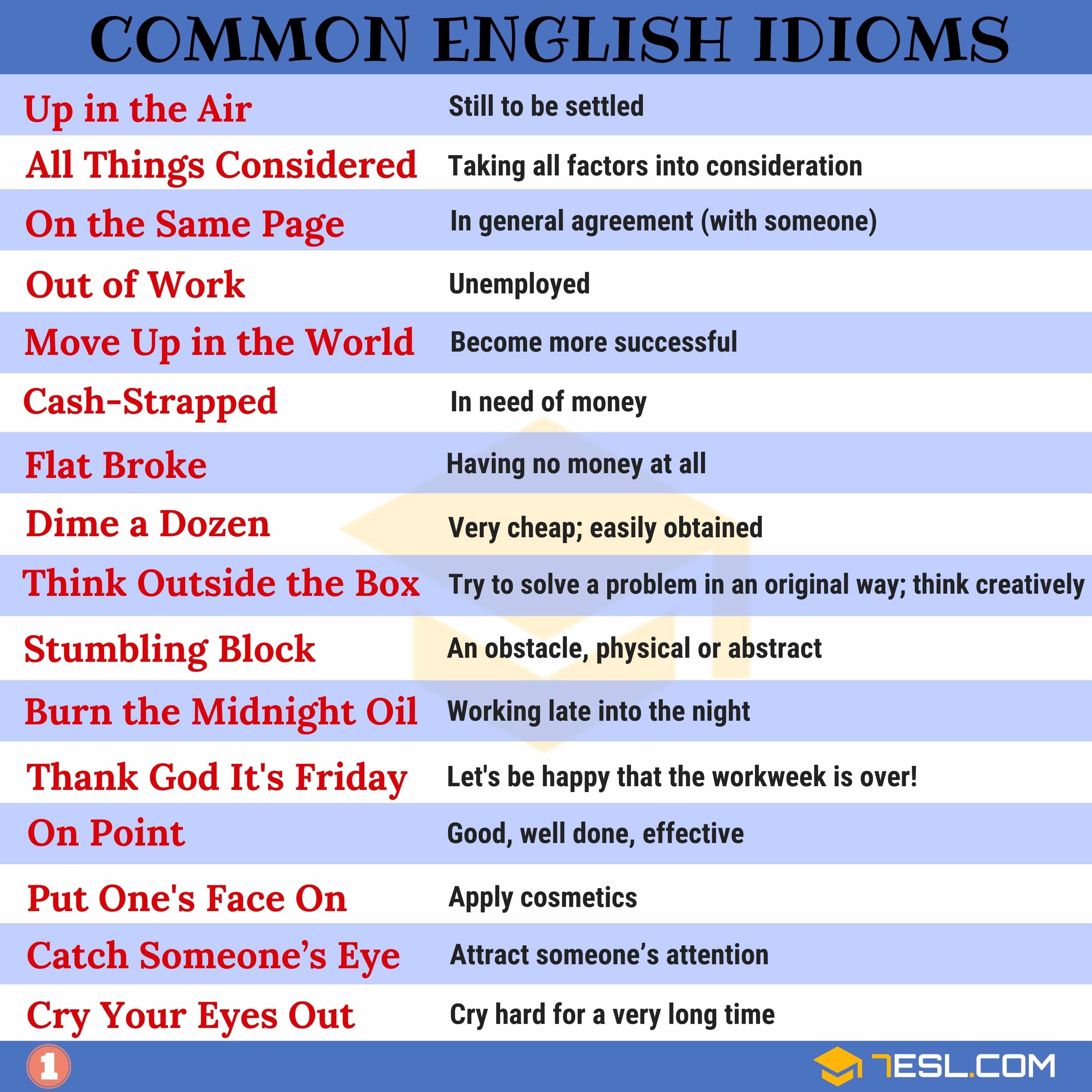
Idiom 1500 English Idioms From Az With Examples Vacation Cheat Sheet: