When you’re learning English as an adult, the challenge isn’t just grammar or vocabulary—you’re also trying to sound natural in everyday conversation. One of the most effective ways to do that is by mastering idioms. Idioms for ESL adults add color, nuance, and cultural depth to your speech, helping you blend in at work, with friends, or while traveling. Below, we break down why idioms matter, offer practical tips for learning them, and showcase some of the most useful expressions for everyday life.
Why Should Adults Focus on Idioms Now?
Adults often skip idioms, thinking they’re only for native speakers. In reality, idiomatic language is a sign of fluency. When you say “break the ice” instead of “make people feel comfortable,” you communicate more naturally. For professionals, idioms can help you convey ideas succinctly in meetings or reports. In social settings, they show that you understand cultural references, which can spark rapport.
What Are the Most Common Idioms That ESL Adults Need?
- Hit the books – to study hard.
- Spill the beans – to reveal a secret.
- Under the weather – feeling ill.
- Let the cat out of the bag – to disclose something inadvertently.
- Piece of cake – something very easy.
These idioms appear in movies, news articles, and everyday chats. Memorizing them in context—rather than as isolated phrases—ensures you’ll use them correctly.
How Can You Learn Idioms Without Overwhelm?
Start with a themed approach. Group idioms by topic: food, work, emotions, and relationships. For example, when discussing meals, learn “bite off more than you can chew” or “the proof is in the pudding.” Practice each group in a sentence or short dialogue. Repeat them aloud to get the rhythm right, and record yourself to spot pronunciation quirks.
What Visual Resources Help Reinforce Idioms?

The image above visualizes rare idioms with simple graphics. Pair each picture with its meaning to create a mnemonic link. For example, a picture of a “balloon” might remind you that “balloon” can mean “to increase rapidly” in a financial context. Such visual anchors make recall faster and more durable.
Where Can You Practice Idioms in Real Settings?
1. Conversation clubs – join an ESL group or a local meetup. Ask partners to use a new idiom each week. 2. Online forums – comment on articles or videos with idiomatic expressions. 3. Workplace emails – incorporate idioms like “think outside the box” in brainstorming summaries.
Using idioms in context reinforces memory and signals that you’re comfortable with native-level nuance.
How to Avoid Common Mistakes with Idioms?
- Literal interpretation – don’t say “the sky is the limit” as if the sky is literally a boundary.
- Overuse – sprinkle idioms sparingly; too many can sound forced.
- Cultural mismatch – some idioms are region‑specific. Verify if an expression is familiar to your audience before using it.
When in doubt, ask a native speaker or consult a reputable dictionary. This way, you avoid miscommunication and build genuine confidence.
What’s the Next Step for Mastery?
Set a realistic goal: learn three new idioms each week and use them in at least two sentences. Keep a personal idiom journal, noting the context and any synonyms. Over time, you’ll notice your conversations becoming richer and your writing more engaging.
By integrating idioms for ESL adults into your daily routine, you’ll not only improve linguistic fluency but also connect more deeply with native speakers. Start today, and watch your English transform from functional to authentic.
When you’re learning English as an adult, the challenge isn’t just grammar or vocabulary—you’re also trying to sound natural in everyday conversation. One of the most effective ways to do that is by mastering idioms. Idioms for ESL adults add color, nuance, and cultural depth to your speech, helping you blend in at work, with friends, or while traveling. Below, we break down why idioms matter, offer practical tips for learning them, and showcase some of the most useful expressions for everyday life.
Why Should Adults Focus on Idioms Now?
Adults often skip idioms, thinking they’re only for native speakers. In reality, idiomatic language is a sign of fluency. When you say “break the ice” instead of “make people feel comfortable,” you communicate more naturally. For professionals, idioms can help you convey ideas succinctly in meetings or reports. In social settings, they show that you understand cultural references, which can spark rapport.
What Are the Most Common Idioms That ESL Adults Need?
- Hit the books – to study hard.
- Spill the beans – to reveal a secret.
- Under the weather – feeling ill.
- Let the cat out of the bag – to disclose something inadvertently.
- Piece of cake – something very easy.
These idioms appear in movies, news articles, and everyday chats. Memorizing them in context—rather than as isolated phrases—ensures you’ll use them correctly.
How Can You Learn Idioms Without Overwhelm?
Start with a themed approach. Group idioms by topic: food, work, emotions, and relationships. For example, when discussing meals, learn “bite off more than you can chew” or “the proof is in the pudding.” Practice each group in a sentence or short dialogue. Repeat them aloud to get the rhythm right, and record yourself to spot pronunciation quirks.
What Visual Resources Help Reinforce Idioms?
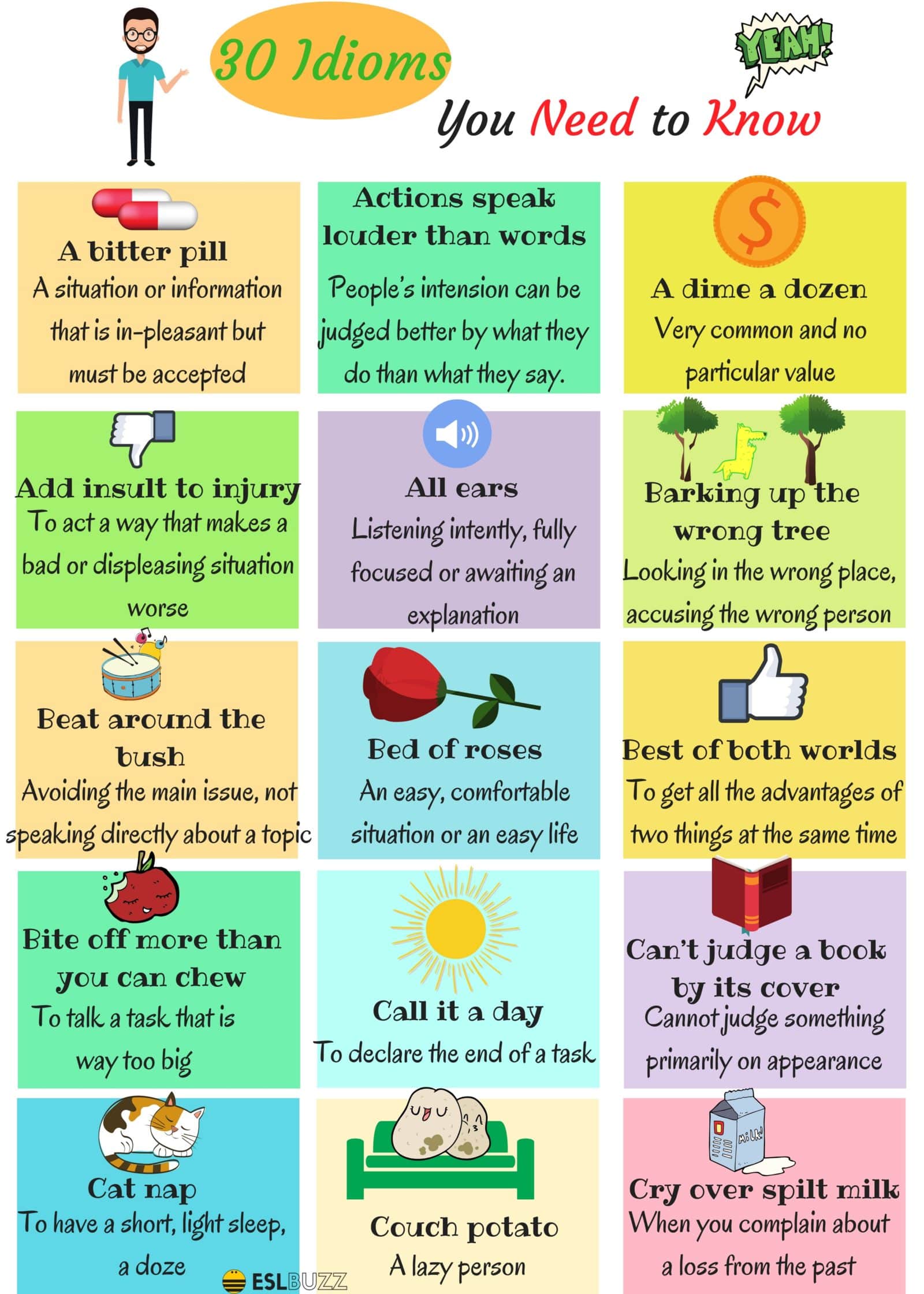
The image above visualizes rare idioms with simple graphics. Pair each picture with its meaning to create a mnemonic link. For example, a picture of a “balloon” might remind you that “balloon” can mean “to increase rapidly” in a financial context. Such visual anchors make recall faster and more durable.
Where Can You Practice Idioms in Real Settings?
1. Conversation clubs – join an ESL group or a local meetup. Ask partners to use a new idiom each week. 2. Online forums – comment on articles or videos with idiomatic expressions. 3. Workplace emails – incorporate idioms like “think outside the box” in brainstorming summaries.
Using idioms in context reinforces memory and signals that you’re comfortable with native-level nuance.
How to Avoid Common Mistakes with Idioms?
- Literal interpretation – don’t say “the sky is the limit” as if the sky is literally a boundary.
- Overuse – sprinkle idioms sparingly; too many can sound forced.
- Cultural mismatch – some idioms are region‑specific. Verify if an expression is familiar to your audience before using it.
When in doubt, ask a native speaker or consult a reputable dictionary. This way, you avoid miscommunication and build genuine confidence.
What’s the Next Step for Mastery?
Set a realistic goal: learn three new idioms each week and use them in at least two sentences. Keep a personal idiom journal, noting the context and any synonyms. Over time, you’ll notice your conversations becoming richer and your writing more engaging.
By integrating idioms for ESL adults into your daily routine, you’ll not only improve linguistic fluency but also connect more deeply with native speakers. Start today, and watch your English transform from functional to authentic.
8 Tricky Idioms About Money With Meanings Infographic

8 Tricky Idioms About Money With Meanings Infographic
Idioms - ESLBUZZ
Idioms - ESLBUZZ
Burn Bridges Idiom Meaning And Sentence - Infoupdate.org

Burn Bridges Idiom Meaning And Sentence - Infoupdate.org
Idiom 1500 English Idioms From Az With Examples Vacation Cheat Sheet:

Idiom 1500 English Idioms From Az With Examples Vacation Cheat Sheet: