Idioms and phrases exercises with answers are a cornerstone for learners aiming to harness the full expressive power of English. These linguistic shortcuts, while vivid in native usage, often trip up even advanced students because their meanings diverge from literal interpretations. Structured practice with immediate feedback transforms ambiguity into fluency, allowing learners to deploy idioms confidently in both written and spoken contexts. This guide outlines effective strategies for selecting and tackling exercises that prioritize real-world applicability over rote memorization.
Selecting Effective Idioms and Phrases Exercises with Answers
Not all exercises are created equal. High-quality materials prioritize contextual authenticity, embedding idioms within scenarios that mirror everyday communication. Look for exercises that provide cultural context—like idioms rooted in British sports or American slang—to deepen understanding. Avoid overly simplistic fill-in-the-blank formats; instead, opt for exercises requiring interpretation, such as paragraph rewrites or dialogue completion. Answer keys should explain not just the correct idiom, but why alternatives fail or how pronunciation nuances affect usage.
Common Idioms Practice with Visual Reinforcement
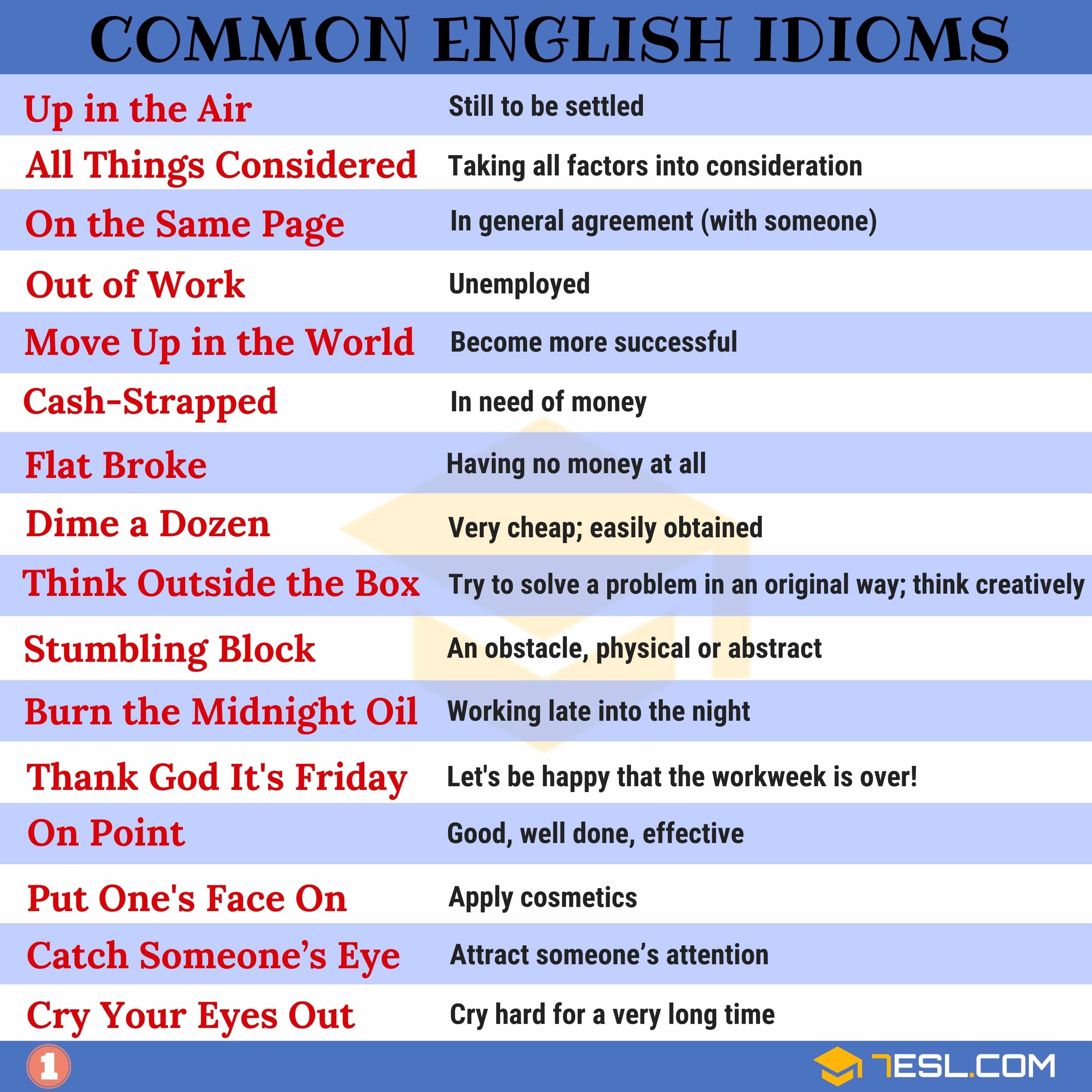
Begin with foundational idioms featured in exercises like "75 Common Idioms Explained." These phrases—ranging from "shoot the breeze" to "kick the bucket"—frequently appear in academic or professional writing. Incorporate listening exercises where learners match idioms to audio clips from podcasts or films. For instance, an exercise might present a business meeting excerpt, then ask students to identify the idiom "circle back" and explain its function. Answer explanations should highlight how idioms streamline communication, such as replacing "Let’s discuss this again later" with "We’ll circle back on this."
Rare Idioms Challenges with Detailed Solutions

Advanced learners benefit from exposure to less common expressions like "dip one’s toe in the water" or "don’t count your chickens before they hatch." Exercises featuring these phrases often include multiple-choice questions where learners must distinguish between similar idioms. For example, an answer key might clarify that "barking up the wrong tree" implies a mistaken assumption, while "spilling the beans" indicates premature disclosure. Including rare idioms in exercises prepares learners for nuanced conversation and demonstrates regional or generational lexical variation.
Building Confidence Through Structured Practice
Effective idioms and phrases exercises with answers incorporate spaced repetition and progressive difficulty. Start with high-frequency idioms in familiar contexts—using the image-based cheat sheet from 7ESL—to build foundational recognition. Gradually introduce idioms from different domains: legal ("objection overruled"), culinary ("piece of cake"), or emotional ("on cloud nine"). Exercises should blend recognition (multiple-choice) and production (sentence creation), ensuring learners can both identify and generate idiomatic language. Answer keys that offer alternative phrasings or note historical origins—like how "rule of thumb" originated from a now-disproven carpentry practice—add depth to the learning process.
Idioms and phrases exercises with answers are a cornerstone for learners aiming to harness the full expressive power of English. These linguistic shortcuts, while vivid in native usage, often trip up even advanced students because their meanings diverge from literal interpretations. Structured practice with immediate feedback transforms ambiguity into fluency, allowing learners to deploy idioms confidently in both written and spoken contexts. This guide outlines effective strategies for selecting and tackling exercises that prioritize real-world applicability over rote memorization.
Selecting Effective Idioms and Phrases Exercises with Answers
Not all exercises are created equal. High-quality materials prioritize contextual authenticity, embedding idioms within scenarios that mirror everyday communication. Look for exercises that provide cultural context—like idioms rooted in British sports or American slang—to deepen understanding. Avoid overly simplistic fill-in-the-blank formats; instead, opt for exercises requiring interpretation, such as paragraph rewrites or dialogue completion. Answer keys should explain not just the correct idiom, but why alternatives fail or how pronunciation nuances affect usage.
Common Idioms Practice with Visual Reinforcement
Begin with foundational idioms featured in exercises like "75 Common Idioms Explained." These phrases—ranging from "shoot the breeze" to "kick the bucket"—frequently appear in academic or professional writing. Incorporate listening exercises where learners match idioms to audio clips from podcasts or films. For instance, an exercise might present a business meeting excerpt, then ask students to identify the idiom "circle back" and explain its function. Answer explanations should highlight how idioms streamline communication, such as replacing "Let’s discuss this again later" with "We’ll circle back on this."
Rare Idioms Challenges with Detailed Solutions
Advanced learners benefit from exposure to less common expressions like "dip one’s toe in the water" or "don’t count your chickens before they hatch." Exercises featuring these phrases often include multiple-choice questions where learners must distinguish between similar idioms. For example, an answer key might clarify that "barking up the wrong tree" implies a mistaken assumption, while "spilling the beans" indicates premature disclosure. Including rare idioms in exercises prepares learners for nuanced conversation and demonstrates regional or generational lexical variation.
Building Confidence Through Structured Practice
Effective idioms and phrases exercises with answers incorporate spaced repetition and progressive difficulty. Start with high-frequency idioms in familiar contexts—using the image-based cheat sheet from 7ESL—to build foundational recognition. Gradually introduce idioms from different domains: legal ("objection overruled"), culinary ("piece of cake"), or emotional ("on cloud nine"). Exercises should blend recognition (multiple-choice) and production (sentence creation), ensuring learners can both identify and generate idiomatic language. Answer keys that offer alternative phrasings or note historical origins—like how "rule of thumb" originated from a now-disproven carpentry practice—add depth to the learning process.
Idioms - ESLBUZZ
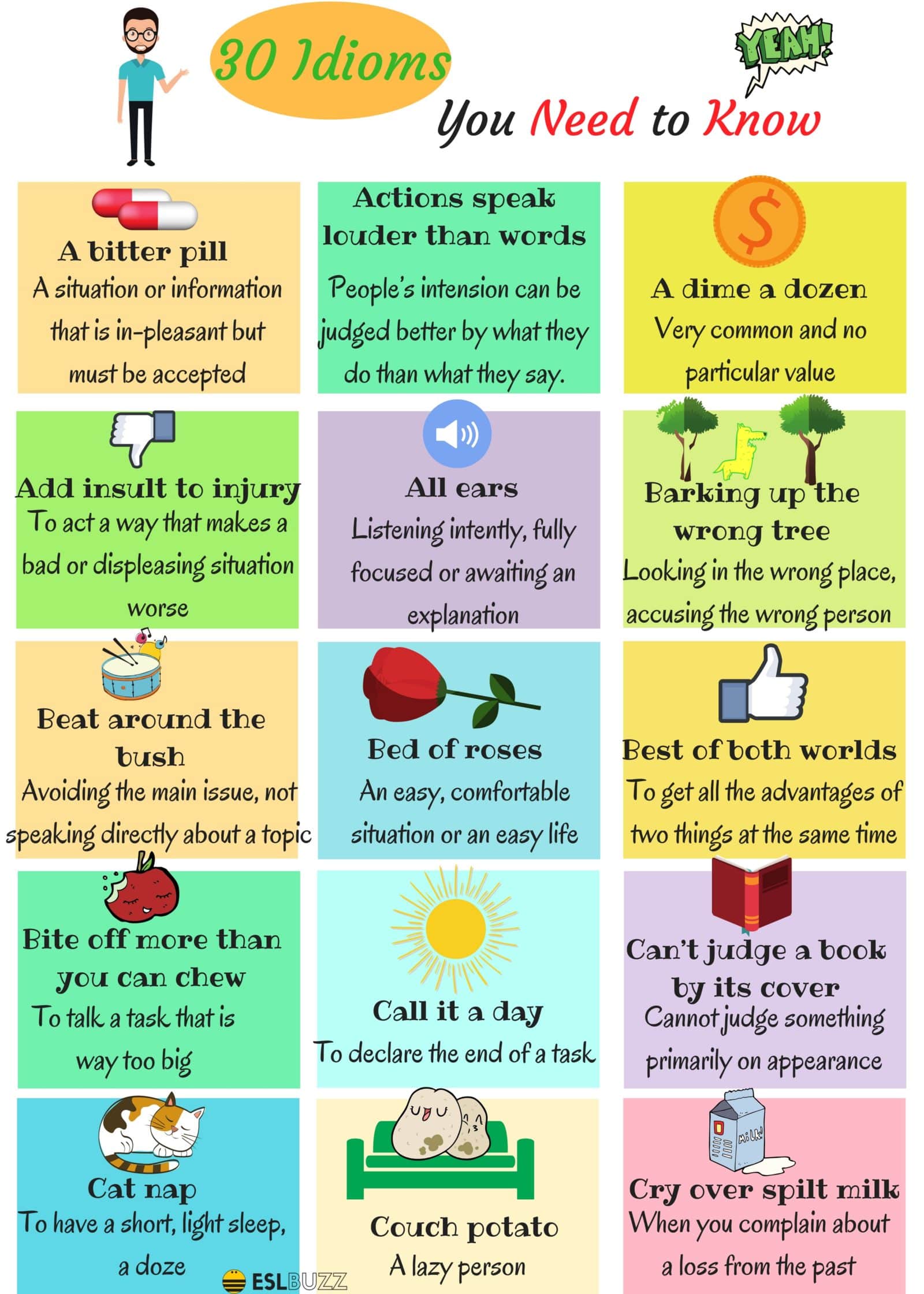
Idioms - ESLBUZZ
8 Tricky Idioms About Money With Meanings Infographic

8 Tricky Idioms About Money With Meanings Infographic
Burn Bridges Idiom Meaning And Sentence - Infoupdate.org

Burn Bridges Idiom Meaning And Sentence - Infoupdate.org